There is a question I am asked, sooner or later, by nearly every reader who encounters my novels for the first time: Why the archaic English? The question is reasonable. We live in an age that prizes clarity, speed, and transparency of style. Modern prose aspires to invisibility—the words, ideally, should dissolve on the page, leaving only the story behind. Why would any novelist willingly swim against that current, adopting a register that demands more of its reader, that slows the eye, that may require a second reading of a sentence before its full meaning yields itself? For me, the answer is not a stylistic preference. It is a conviction about what historical fiction is and what it owes its subject.
The Anachronism We Never Notice
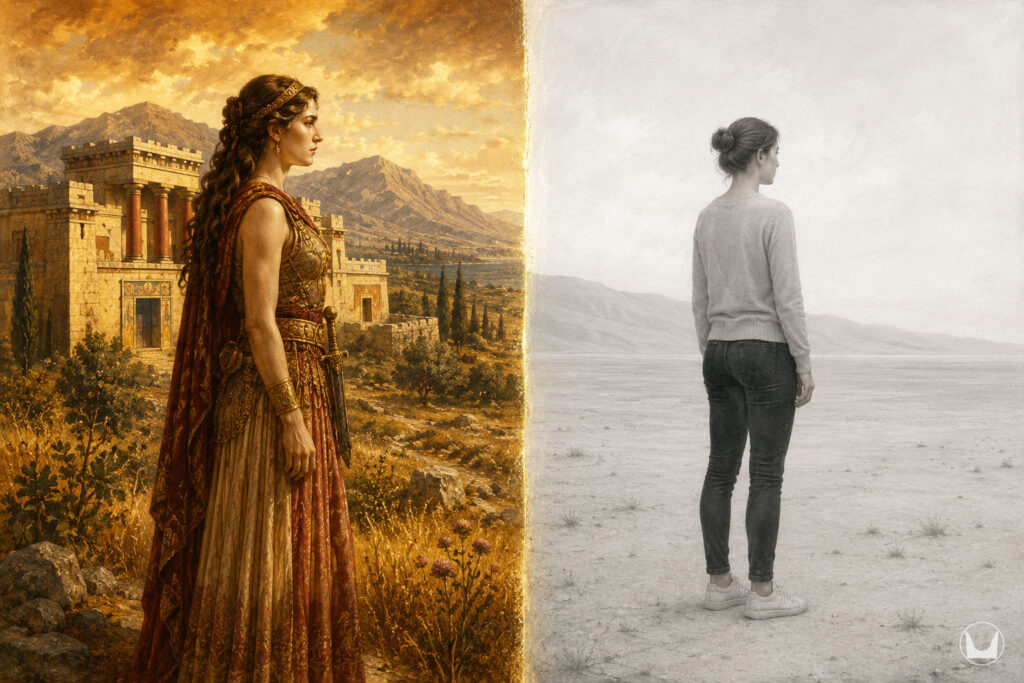
When we read a novel set in Bronze Age Greece or fifteenth-century Italy and the characters speak and think in the idiom of contemporary English—crisp, colloquial, psychologically transparent in the manner of modern literary fiction—we accept a profound anachronism without questioning it. We do not notice it because we have been conditioned not to. Modern prose is the water we swim in; yet we do not feel it as a hindrance.
But consider what that transparency conceals. The people of Mycenaean Arcadia did not think in the categories of post-Enlightenment individualism. The merchants and artists of Quattrocento Florence did not experience time, selfhood, or divine presence as we do. Their inner lives were structured by cosmologies, social codes, and linguistic habits foreign to our own. When a novelist renders those lives in smooth contemporary English, something essential is lost: not merely atmosphere but epistemological truth. The language becomes a lie of omission, assuring the reader that these people were, at bottom, just like us. They were not.
This is why I write in archaic English, not to perform antiquity but to honor distance. The temporal gap between my readers and my characters is real, and the language should tell the truth about that gap.
What Archaic Prose Does That Modern Prose Cannot
The difference is not merely decorative. Consider the same moment rendered in two registers, drawn from Atalanta of the Wild:
Archaic: “No wind stirs the canopy of the trees, nor the blades of grass beneath. From the lofty vantage, the sight is unbarred: a small herd of deer feeds upon the verdant banks. She loses no time. Two shafts she lets fly, and a great buck utters a piteous cry as his mighty frame topples to the ground.”
Modern equivalent: “The air is still. From the rocky outcrop, she spots a small herd of deer grazing by the stream. She doesn’t hesitate. She fires two arrows, and a large buck cries out and falls.”
The buck dies in both versions. The action is identical. Yet the two passages do entirely different things. The modern version is efficient, transparent, and instantly forgotten. The archaic version enacts the scene rather than reporting it: the sight is unbarred gives us Atalántē’s perspective as a physical experience; utters a piteous cry grants the buck a moment of dignity in death; mighty frame topples carries the weight of what has fallen. The reader spends perhaps ten seconds more with the archaic passage. Those ten seconds are not delay. They are the story.
The Music of Distance
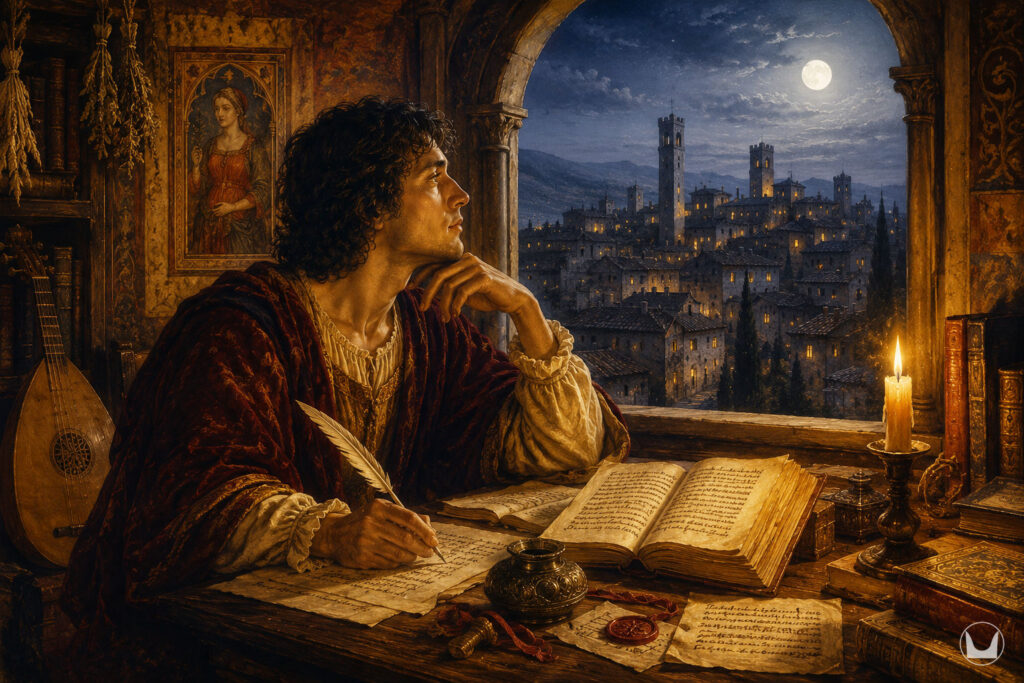
Here is a passage from the Epilogue of Meeting Donatello, in which the narrator reflects on the characters he has carried within him across the years:
Archaic: “Since I began writing their tales, laughter, tears, and sighs fill my days through the wee hours. The tongue of the present flows not from their lips; their words meet me as they did long agone, full of music and verse, in the cadence of my remembered Renaissance. No seeking of mine may uncover how they breathe so true, for though centuries part us and vast lies the sea ‘twixt us, the sounds from my home of old in the Apennines yet reach my ears.”
Modern equivalent: “Since I began writing about them, I’ve spent countless late nights laughing, crying, and sighing. They don’t speak in modern language; their voices come to me as they always have, musical and old-fashioned, echoing the Renaissance I remember. I can’t explain why they feel so real — though centuries separate us and I’m far from the Italy I once called home, I can still hear them.”
The modern version communicates the same information and nothing else. The archaic version carries within it the very temporal dislocation it describes—long agone, the cadence of my remembered Renaissance, vast lies the sea ‘twixt us—so that the form and the content become inseparable. You cannot extract the meaning from the music without destroying both.
When Violence Demands Ceremony
Some readers assume that archaic prose softens dramatic intensity, that the elevated register distances us from visceral experience. The opposite is true. From Chapter Six of Asterios and the Labyrinth:
Archaic: “Before the wretched victim may utter a scream, scaled coils as broad as a bull’s rump lash forth with blinding speed. One moment the poor youth’s torso rests untouched; the next, his mutilated remains fountain in a ruby whirlwind of viscera over the ground. Panicked cries rise from the Knossian ranks as the monstrosity advances, her prize still clutched in those fiendish claws.”
Modern equivalent: “Before the victim can scream, thick scaled coils strike with terrifying speed. One moment he is whole; the next, his remains are scattered across the ground in a spray of blood. The Knossian soldiers cry out in panic as the creature moves forward, still gripping its prize.”
The modern version is brutal but generic. It could describe any monster in any novel. Yet the archaic version achieves something rarer: it makes the horror ceremonial. Fountain in a ruby whirlwind of viscera is not merely graphic; it is operatic. The elevated diction does not diminish the violence—it elevates it to the register of myth, which is precisely where Echidna belongs.
When Intimacy Requires Ceremony
If archaic prose elevates violence into myth, it performs an equally essential service for tenderness. It grants privacy to what modern prose would expose too nakedly. From Chapter Twenty-Two of A Tale of Paris & Paris: Echoes of Troy:
Archaic: “When the morrow gray has chased the night’s shadow, they waken, saddle their noble steeds, and bid farewell to the gracious dames who insist they partake of bread, wine, and porridge. In a barn most charming have they lodged overnight, their rest untroubled by the cares of the world. This experience of exposed affection has allowed them to enjoy a moment’s peace; few possess awareness of their entwined hearts. Absent is fear of busy gazes spying them bestow kisses upon each other, for in his devotion he has avowed to slay the beholder, facing the dread of eyes and hearts maligned.”
Modern equivalent: “At dawn they wake, saddle their horses, and say goodbye to the hospitable women who insist on feeding them breakfast. They spent the night in a pleasant barn, undisturbed by the world’s troubles. The stolen intimacy gave them a rare moment of peace; few people know about their relationship. They have no fear of prying eyes here — he has sworn to kill anyone who discovers them, ready to face the danger that hostile witnesses would bring.”
The modern version is clear, functional, and utterly prosaic. It tells us what happened. The archaic version tells us what it meant. Consider morrow gray, not merely dawn, but a dawn with atmosphere, a dawn that has chased shadow rather than simply arrived. Consider gracious dames, not merely hospitable women, but figures who belong to a social world with its own codes of courtesy and obligation. Consider entwined hearts, not merely a secret relationship, but two souls whose fates have become inseparable, the metaphor doing what clinical modern diction cannot. And the dread of eyes and hearts maligned—this is not paranoia but lived reality, the weight of a world that would destroy what it does not understand. The archaic register does not merely describe their vulnerability; it enacts the fragility of their situation, the precariousness of love conducted in the margins of a hostile society. Strip away the language and you strip away the stakes.

The Price of Admission
I will not pretend that archaic prose asks nothing of its reader. It does. The reader of Atalanta of the Wild or A Tale of Paris & Paris must be willing to slow down, to allow the syntax to work on them, to trust that a sentence requiring two readings rewards both. This is the price of admission, and I make no apology for it.
The readers of Mary Renault do not complain that The King Must Die is inaccessible because Theseus speaks in elevated Homeric register. The readers of Dorothy Dunnett do not resent that Lymond’s dialogue occasionally demands three readings to parse. They relish it. The readers of Umberto Eco accept that The Name of the Rose will take them somewhere uncomfortable before it takes them somewhere true. These are my readers. They know, as I do, that the greatest historical fiction does not make the past comfortable. It makes it present—strange, vivid, and alive—through the one instrument powerful enough to carry it across the centuries.
The archaic register serves the full emotional spectrum of my novels: from the operatic to the tender. Language is not the vessel that holds the story. Language is the story. Change it, and you change everything.
Rio de Janeiro, the xv day of May, MMXXVI.

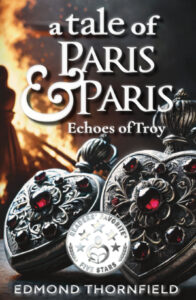
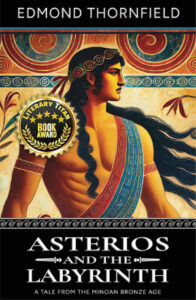

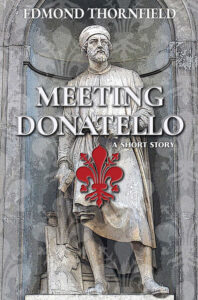
Click any cover to read a preview chapter and learn more.