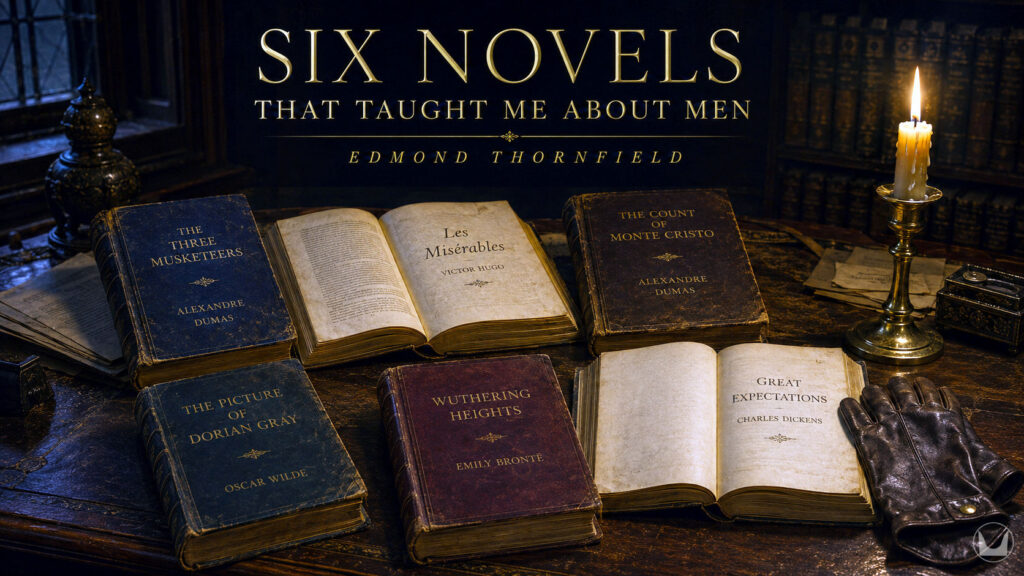
There is a particular dishonesty that runs through a great deal of fiction written by and about men, a tendency to grant male characters the external architecture of complexity without the internal substance of it. Men in such novels have ambitions, rivalries, codes of honor, and moments of violence, but their inner lives remain largely unexamined, as though the examination itself were somehow unmanly. The six novelists on this list refused that bargain entirely. They looked at men—at what men want, what men fear, what men do to one another and to themselves when the world is not watching—and they reported their findings without flinching and without flattery.
These are the six novels that taught me what it means to write a man truly.
1. The Three Musketeers, by Alexandre Dumas (1844)
I begin here not because Dumas is the most psychologically penetrating novelist on this list but because Athos, Porthos, Aramis, and d’Artagnan gave me something the more austere novelists sometimes withheld: the sheer pleasure of male fellowship. The four musketeers do not merely fight together and drink together and get into magnificent trouble together. They love one another, in the unguarded, unashamed way that men in fiction are rarely permitted to love. There is no irony in their loyalty. There is no competition corroding their friendship from within. “All for one and one for all” is not a motto. It is a description of how they actually live.
Dumas taught me that male friendship, written honestly, is one of the most moving subjects available to a novelist. The bond between Néos, Periklos, Polydeúkes, Hēraklēs and the other heroes in Atalanta of the Wild owes more to the musketeers than to any classical source. Brotherhood, freely chosen and freely maintained, is its own form of heroism.
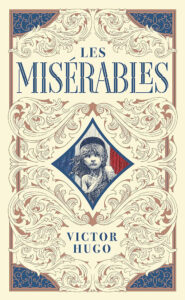
2. Les Misérables, by Victor Hugo (1862)
Jean Valjean is the most complete man in this list, and by complete I mean this: Hugo gives him every dimension a human being possesses: physical power and moral frailty, the capacity for great goodness and the memory of great wrong, a past that pursues him and a future he builds with his own hands. He is a criminal, a saint, a father, a fugitive, and a man of inexhaustible will. Hugo never allows any one of these identities to cancel the others out.
What Les Misérables taught me is that redemption in fiction must be earned at full cost, not announced, not symbolized, but dramatized across hundreds of pages of concrete moral choice. Valjean does not become good in a single transformative moment. He becomes good slowly, imperfectly, under continuous pressure, making the right choice again and again in circumstances that make the wrong choice far easier. That is how character actually works. Hugo knew it, and he built a cathedral to prove it.
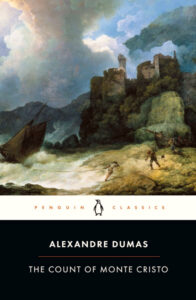
3. The Count of Monte Cristo, by Alexandre Dumas (1844)
If The Three Musketeers taught me brotherhood, The Count of Monte Cristo taught me obsession, the terrible elegance of a mind entirely consumed by a single purpose. Edmond Dantès is one of the great self-made men of fiction, except that what he makes of himself is not a success but a weapon. He remakes his identity, his fortune, his very name in service of a revenge so meticulously planned and so patiently executed that it reads less like passion than like architecture.
What Dumas taught me here is subtler than it first appears: that the man who devotes his life entirely to one end— however just and brilliantly pursued—pays a price that no victory can fully recoup. Dantès wins. And in winning, he discovers that the self he sacrificed to the project of revenge was the only self worth having. I think of him whenever I write a man who has chosen an idea over a life.
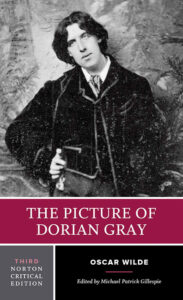
4. The Picture of Dorian Gray, by Oscar Wilde (1890)
Wilde gave me the most seductive and the most dishonest man on this list, and he gave him to me with full awareness of both qualities. Dorian Gray is a study in what happens when beauty is mistaken for worth, when a man, told often enough that his face is everything, begins to believe it and to live accordingly. The portrait ages. Dorian does not. The moral rot that accumulates in the painted canvas accumulates equally in the man, invisible to the world and thus easy for Dorian himself to deny.
Beneath all the wit and the dazzling prose, what Wilde taught me is that vanity is not a minor vice. It is a comprehensive one because it substitutes the self-image for the self and then defends that substitution against all evidence. Every man I write who is more invested in how he appears than in what he is carries some trace of Dorian Gray. They are usually the most dangerous characters in the room. Lino Briani, one of the secondary figures in A Tale of Paris & Paris: Echoes of Troy, my Italian Renaissance novel set in Cortona, is one such man.
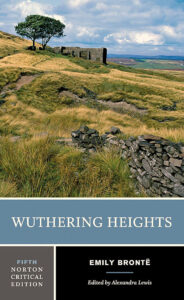
5. Wuthering Heights, by Emily Brontë (1847)
Heathcliff is the most uncomfortable man on this list, and I include him precisely for that reason. He is not a romantic hero, whatever the novel’s popular reputation might suggest. He is a man of consuming hatred, capable of cruelty that spans generations. He pursues his vengeance not merely against those who wronged him but against their children and their children’s children, as though the injury done to him were so total that nothing less than the destruction of an entire family line could balance it.
Yet Brontë makes you feel the source of that hatred, the wound beneath the cruelty, the love so absolute and so absolutely refused that it curdled into something unrecognizable. Heathcliff taught me that male destructiveness in fiction is not interesting when it is simply evil. It becomes interesting—becomes literature—when you can trace it back to its origin and understand how a human being arrived at such a place. I have loved and hated Heathcliff from the moment I met him. He is unforgettable.
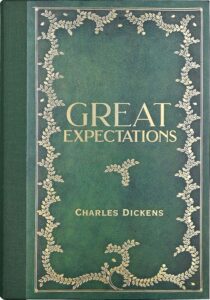
6. Great Expectations, by Charles Dickens (1861)
Pip is the youngest man on this list and in some ways the most honest self-portrait fiction has ever produced of male social ambition. He sports the particular vanity of a young man who has been told that he deserves better than his origins and who proceeds to ruin several good relationships in the course of discovering that he does not, in fact, deserve better than the people who loved him before the money arrived.
Dickens is merciless with Pip in the way that only a novelist who recognizes his subject from the inside can be. Pip is not wicked. He is something more commonplace and more forgivable and more instructive: he is weak in the way that most people are weak, susceptible to flattery and status and the intoxicating belief that refinement is the same thing as worth. His education, conducted by life rather than by any school, is the novel’s great subject. What he learns, at great cost to himself and to Joe Gargery especially, is that a gentleman is not made by expectations but by conduct.
Great Expectations taught me that a man’s most revealing moments are not his crises but his ordinary choices, the small daily decisions about whom to acknowledge, whom to slight, whom to repay with loyalty, and whom to abandon for advantage. Pip makes almost all of these wrong, and Dickens records every one of them with a clarity that is an act of love.

Five novelists, six different answers to the same question: what does a man look like when you remove the armor? The answers range from the magnificent fellowship of the musketeers to the corroded soul of Dorian Gray, from the hard-won sainthood of Jean Valjean to the consuming darkness of Heathcliff. What they share is this: they were written by novelists who refused to grant their male characters the comfortable evasion of unexplained interiority. Every one of these men is knowable, in the end—not excusable, not always admirable, but fully and frighteningly human.
That is what I ask of my own male characters.

Rio de Janeiro, the xxiv day of May, MMXXVI