How To Design Your Book: Why the Prose Comes First

How To Design Your Book

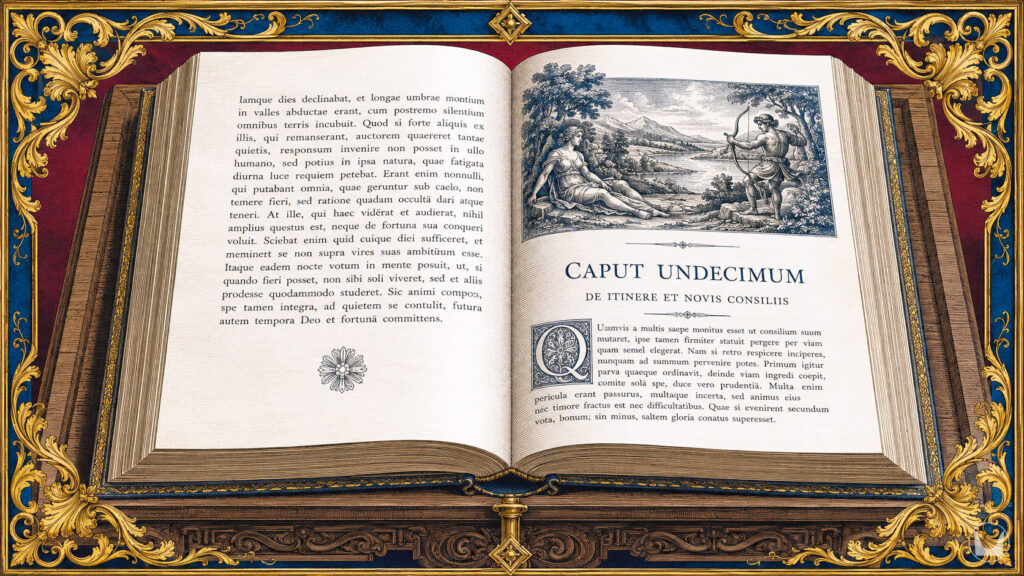
The prose is the most important element—everything else is complementary. The purpose of book design is not to make pages beautiful. It is to make the prose beautiful to read. Most conversations begin one step too late: which font, how much margin, what goes on the cover. Those considerations are downstream of a prior one

How To Design Your Book Read More »

GODS WHO ARE NOT METAPHORS

Gods Who Are Not Metaphors

Writing Divine Presence in Bronze Age Fiction as Lived Reality Rather Than Abstraction. Mythological fiction has a problem that most writers fail to solve: the gods are either too large or too small. Made too large, they do not inhabit the story; they furnish it. Artemis stands for chastity, Aphrodite for desire, Athena for wisdom,

Gods Who Are Not Metaphors Read More »

Atalanta Before She Was a Myth

Atalanta Before She Was a Myth

What the Mythological Tradition Preserves and What the Novelist Discovers Beneath It. There is a kind of silence in ancient sources that is not absence but compression. The authors who mention Atalanta—Hesiod in fragments, Pindar, Apollodorus, Diodorus Siculus, Pausanias, Ovid, Hyginus—do not bother to explain her. They assume their audience knows who she is. The

Atalanta Before She Was a Myth Read More »

Writing the Unknown: How Historical Fiction Reconstructs Ancient Greek Religion

Writing the Unknown: How Historical Fiction Reconstructs Ancient Greek Religion

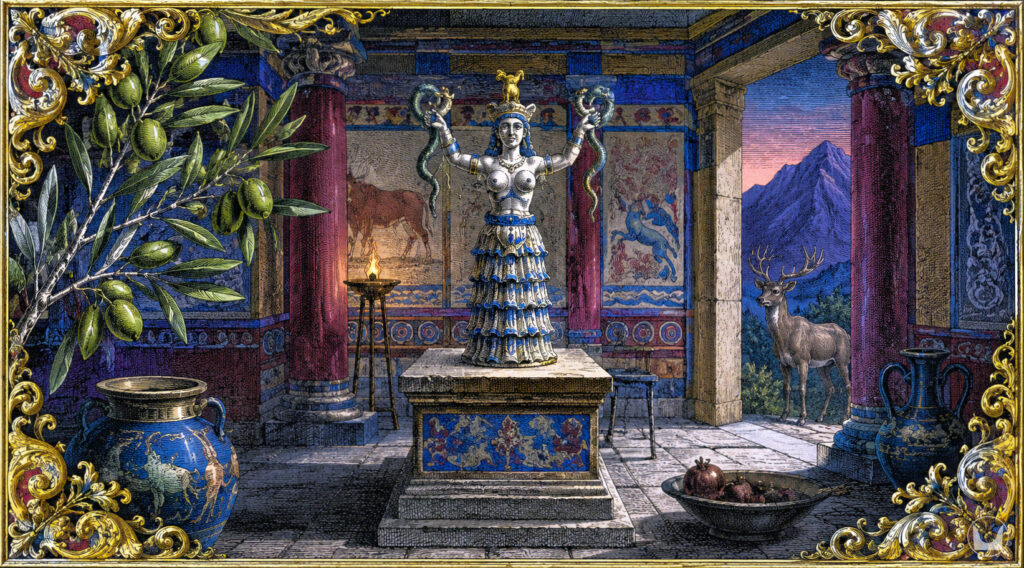
The question arrived before I wrote a single page of Asterios and the Labyrinth. I was standing by the reconstructed Tripartite Shrine at Knossos, watching other visitors move past without pausing, and I thought: I have to put a character here. He has to believe something about what he sees. And I do not know

Writing the Unknown: How Historical Fiction Reconstructs Ancient Greek Religion Read More »

Seven Books That Will Make You a Better Historical Fiction Writer

Seven Books That Will Make You a Better Historical Fiction Writer

For those who wish to explore the relationship between Homer, the Bronze Age, and the archaeological record—and to understand why the distance between them matters to anyone who writes in that world. A historical novelist working in the Bronze Age Aegean faces a problem no amount of imagination alone can solve: the world he is

Seven Books That Will Make You a Better Historical Fiction Writer Read More »

The Problem of the Villain Who Does Not Know He Is One

The Problem of the Villain Who Does Not Know He Is One

On antagonists who operate from a coherent internal logic and whether historical fiction can afford a pure villain. There is a kind of antagonist who appears in lesser historical fiction with reassuring frequency: the man who enjoys being cruel, who oppresses because oppression pleases him, whose motives require no further excavation, as the author has

The Problem of the Villain Who Does Not Know He Is One Read More »

Powered By EmbedPress

Powered By EmbedPress

Powered By EmbedPress