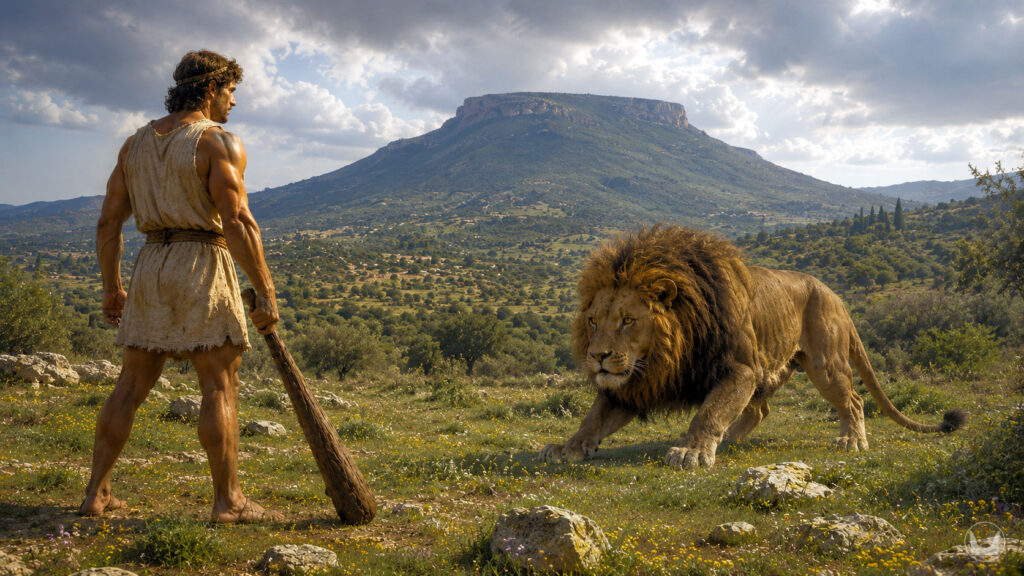
There are journeys one spends a lifetime preparing for without knowing it. Mine to Archaia Neméa began, as so many things do, in childhood—with a book.
I was perhaps seven years of age when my beloved Madrinha Ionyr placed in my hands a children’s volume of the Twelve Labours of Hēraklēs on my birthday. I do not remember the edition, nor the illustrations with any precision, but I remember the feeling: the certainty that these places were real, that the lion had breathed, that the hero had walked upon the earth beneath the sky. From that day, I carried Neméa within me like an inevitable destination, a debt owed to the boy I had been, to be paid when the man was ready.
Nearly fifty years passed.
Nafplion to Neméa: Forty Kilometers of Ancient Ground
It was on a clear April morning of 2019, during one of my journeys through the Peloponnese, that I finally set out to honour that debt. From Nafplion, where I had based myself, I had reserved a touring bicycle for the round trip, which would run a little over eighty kilometers, some fifty miles, across the Argolid plain and up into the hills of the Nemean valley. I had stood before on the viewing deck outside the small museum at the Archaeological Site of Mycenae, looking with longing toward those distant mounts, knowing what lay beyond them. By half past eight that morning I was on my way.
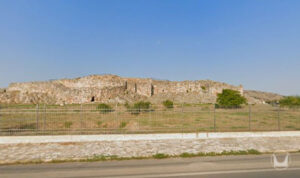 The first landmark came quickly: the ruins of the acropolis of Tiryns, rising from the flat ground along Highway 70, its massive Cyclopean walls as improbable as ever against the morning light. I did not stop. I knew Tiryns already. So I pressed on, turning onto the Epar.Od. Nafpliou-Korinthou road, the quieter alternate that skirts east of the city of Argos and threads instead through the rural villages of Panaritē and Poullakida, on through Monastiraki and across the plain between Mykines and Fichti, before rejoining Highway 7 further north. The road was flat and agreeable, the morning young, the Argolid opening around me in that particular Greek light that seems to arrive already ancient.
Then the mountains began.
They were not the mountains of Tuscany—I have pedaled from the city of Florence to Impruneta through those true heights, walking beside my bike more than once on the steeper grades—but they demanded their due. I kept north on Highway 7, then turned northeast onto Highway 66. I confess the number made me smile. Many years ago I lived one block south of Foothill Boulevard in Rancho Cucamonga, California, and for over two decades that famous road ran alongside my life, though I never took it all the way to Chicago. Here, at least, I finally got my kicks on Route 66, even if the destination was not Illinois but the sacred valley of Neméa. 😁
I crossed over Freeway E65, continued on Highway 66, and then, before the roundabout down the hill, without warning or preparation, the view struck me.
The Plain of Neméa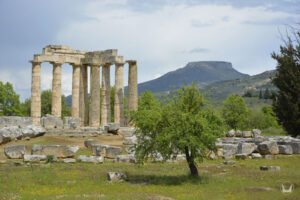
The valley opened before me as a gift. It was already green, ahead of full Springtide, the meadows vivid with that particular tender green that the Greek countryside wears only in April, scattered through with low wildflowers. In the distance, above the valley’s rim, rose Mount Apesas (present-day Mount Phoukas), the flat-topped summit where, according to the ancient tradition, Perseus erected an altar to Zeus upon his return from slaying Médousa. I stood over my bicycle at the crest of that view and wept. There is no more precise word for it. Nearly fifty years of anticipation met the actual landscape. And I wept.
I turned left at the roundabout and made my way to the archaeological site and museum. It was half past noon.
Within the Temple
The weather had shifted. Clouds had moved in from the northwest, and a cold wind was running through the valley, the kind of wind that belongs to sacred sites, that seems to arrive from somewhere older than weather. I locked my bicycle to the wrought-iron fence of the museum parking lot and visited the ruins first.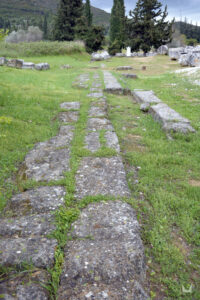
There is not a great deal remaining at Archaia Neméa by the standard of the great Peloponnesian sites; time and spoliation have been thorough in their work. Yet what endures endures completely. Three columns of the Temple of Nemean Zeus still stand, their Doric shafts of warm cream limestone rising against the sky with that particular authority that only genuine antiquity possesses: not the authority of size alone, but of duration, of having outlasted every human concern that once surrounded them. I explored what remained of the sanctuary, within sight of the hills where the great lion had ranged.
Then I stood beside the main sacrificial altar, and within the Temple of Nemean Zeus itself. The wind came through the standing columns. A light rain had begun.
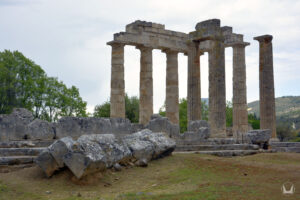 I was overwhelmed a second time. This is what the embodied encounter with the ancient world does to those of us who carry it within. It does not confirm what we imagined because imagination is always inadequate. It replaces imagination with something far larger, and far more quiet.
The Storm
I had seen the entire site, and the museum, and the rain was settling into earnest. It was time to begin the return to the Argolid coast. I retrieved my bicycle and set off.
The thunder and lightning found me precisely at the roundabout.
In the absence of shelter, I made a decision that I can only attribute to a temporary suspension of rational faculty: I rode toward the other branch of the road, where large oak trees lined both sides and formed a kind of canopy. I sheltered beneath them. During a lightning storm. I cannot fully account for this. The mind, when cold and wet and surprised, does not always distinguish between cover and shelter, and oak trees in a Greek valley during a spring thunderstorm are emphatically the former.
It was pouring. It was cold—colder than the rain I know in Brazil, a cold with weight and intention to it. I came back to my senses, pedaled back to the roundabout, and found a restaurant on the corner. I was soaking through to the skin. The lady who worked there, a formidable woman who brooked little nonsense, insisted I come inside. I declined. I was in no condition to sit in any establishment, but I accepted the covered porch. There I sat with my coffee and a plate of food, wet and shivering and profoundly happy, watching the storm fall over the valley of Hēraklēs. In about half an hour, it relented. I mounted my bicycle and took to the road.
What I did not know was that the storm had a final word to say. As I descended through the foothills back toward Highway 7, it began to snow. I want to be precise about my condition at this moment: soaking wet bicycle shorts; an equally soaking tank top; a waterproof backpack containing my camera, my telephone, and my wallet; a wet bicycle on a wet road; and snow falling through the April air of the Argolid, without apology, as though it were entirely ordinary.
It was the first time in my life I have been snowed upon while cycling. I suspect it will remain singular.
The Road Back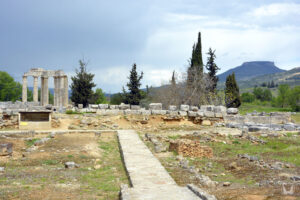
I chose to return through the city of Argos, staying on Highway 7 through Fichti and down through the urban center rather than the quieter eastern route. I had time. The bicycle rental was for two days, and I could store it at my hotel in Nafplion. The road was well-lit and familiar. I turned south onto Highway 70 and followed it all the way back to the coast.
These are the literary-archaeological expeditions that underlie everything I write. My novels are not built from libraries alone. They are built from the feel of actual ground underfoot, from standing inside the structures, breathing the air of the valleys, mountains, and plains. If you wish to accompany me on one of these journeys, reach out. The Literary Travel page on my website will give you a sense of the places I go and of what such a journey means in practice.
I am sixty-two. The best days, I am convinced, are not behind us. The road to Archaia Neméa is one of the most memorable days of my life—snowed upon, soaked through, overwhelmed twice to tears—and I would ride it again tomorrow.
Many of us can still hit the road, Jack.
Rio de Janeiro, Autumntide of MMXXVI

PS: Hēraklēs is a character in my upcoming novel Atalanta of the Wild, slated for publication by the end of May 2026. Check my author’s website for more information and subscribe to my newsletter.
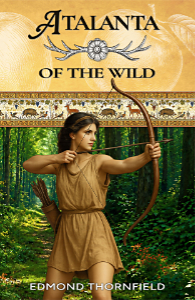
Click the cover to read a preview chapter and learn more.