The question of point of view is the first serious decision a novelist makes, and it shapes everything that follows—the texture of the prose, the range of the story, the emotional distance between reader and character. Writers have many options: first-person, second-person,  omniscient third, limited third, close third, or some combination of these. For my own fiction, I have settled on limited and close third-person narration. It grants me both intimacy and flexibility, allowing me to experience the story through a character’s eyes without surrendering the breadth that a larger cast of minds can provide.
First-Person Becomes Restrictive
This is not an attack on first-person narration. It simply does not suit my temperament as a novelist.
When a single voice must carry an entire narrative, the narrator must be present for everything of consequence. The reader experiences only one consciousness, one set of assumptions, one pair of eyes. After several hundred pages, I find that perspective confining, not because the voice is weak, but because the form itself has walls.
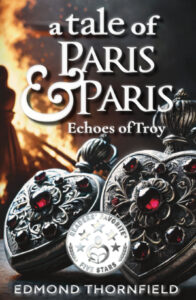
 My first novel, A Tale of Paris & Paris: Echoes of Troy, contains eleven point-of-view characters. Each brings different assumptions, fears, desires, and blind spots to the same story. Some vanish from the narrative; others emerge when the reader least expects them. The shifting viewpoints build a tapestry that no single narrator could have woven. I have observed that readers often fear multiple POVs more than they actually struggle with them, and the anxiety of “keeping track” rarely materializes once the reading is underway.
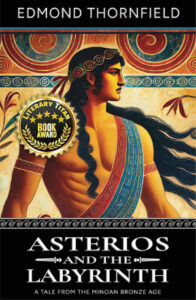
That said, I do not favor large ensembles for their own sake. Asterios and the Labyrinth distributes point of view among six characters. Atalanta of the Wild narrows further still to two—which was exactly right for the tale those two voices had to tell.
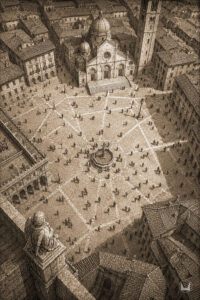 Omniscient Narration Creates Distance
The omniscient narrator knows too much. It explains motives, summarizes inner lives, and occasionally tells the reader what to think, which is, in my view, the cardinal sin of prose fiction. The omniscient narrator stands outside the story and reports it.
By contrast, close third-person feels like living inside the story. I do not wish merely to know that Lorenzo, Asterios, or Atalanta fear something. I wish to experience the fear alongside them, with the same incomplete information and the same racing thoughts.
Close Third-Person Creates the Illusion of Presence
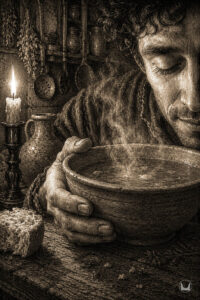
Consider these examples from Lorenzo’s passages in A Tale of Paris & Paris: Echoes of Troy:
Santa Madonna, this is goodly chicken broth.
Or:
I ought to flee.
Or:
Such charm has he.
The narration slips so near the character’s consciousness that the boundary between narration and thought nearly disappears. Readers stop observing and begin inhabiting. The character’s perceptions become the reader’s perceptions. That is one of the principal strengths of close third-person, and it is the effect I seek in every scene.
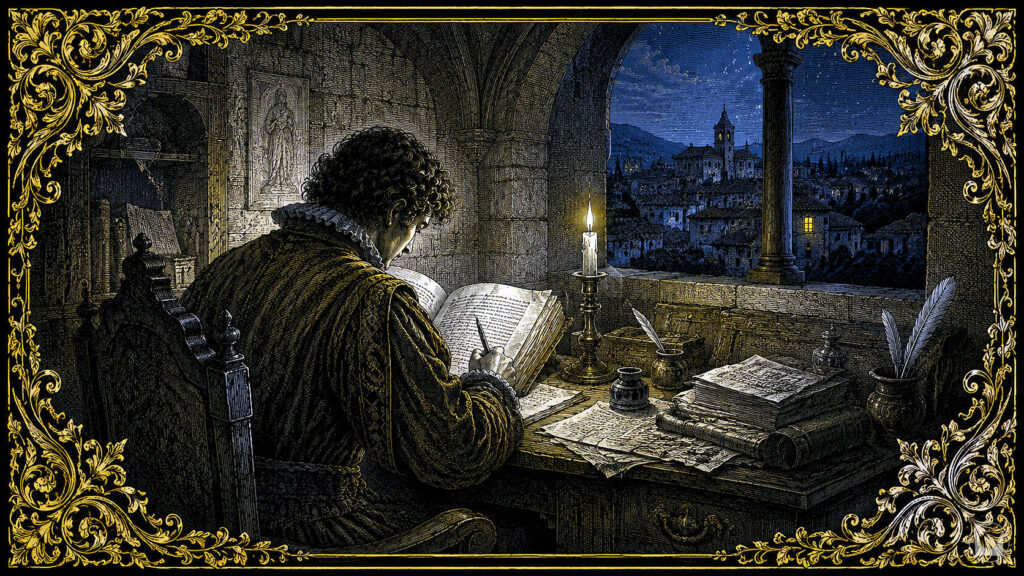
This illusion of presence also confers practical narrative flexibility. In A Tale of Paris & Paris: Echoes of Troy, Lieutenant Stefano Tiepolo—Lorenzo’s right-arm officer—has a point-of-view role for a specific reason: to convey plot-related events that neither the protagonists nor the secondary characters witness. His sections do not exist to deepen his characterization, though they do that as well. They exist to eliminate any need for clumsy exposition. The close third makes that possible without the machinery showing.
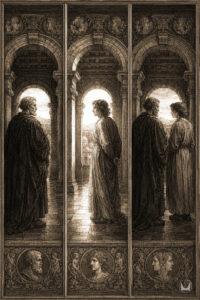
 Different Characters Reveal Different Truths
A scene changes dramatically depending on whose head the reader occupies. In the kitchen sequence from Chapter One of A Tale of Paris & Paris: Echoes of Troy, the same gathering appears through the eyes of Lorenzo, Costanza, and Vittorio. Each understands only a portion of reality. The reader assembles the whole picture from partial testimonies, which creates dramatic irony and genuine mystery without an omniscient narrator to stage-manage the revelations.
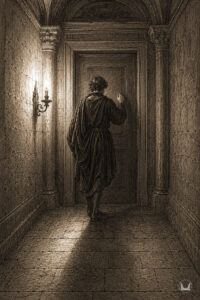
 Close Third-Person Preserves Mystery
If the narrator knows everything, surprises are difficult to sustain and revelations arrive weakened. In close third, the reader knows only what the viewpoint character knows. Misunderstandings become meaningful rather than merely ironic. Discoveries feel earned. The revelation in Chapter Thirty-Six of A Tale of Paris & Paris: Echoes of Troy works because of this principle: the reader learns the truth in the same moment the character does, at the same speed, with the same shock.
 Historical Fiction Benefits from Immersion
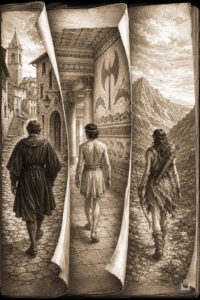
Historical fiction asks readers to enter a world that is not their own. Close third-person narration accomplishes that transfer better than any other approach I have found. Rather than explaining Renaissance Tuscany, I allow readers to experience it through the people who live there. Lorenzo does not lecture about Cortona. He walks through it, smells it, jokes about it, belongs to it. The Bronze Age Arcadia of Atalanta of the Wild works on the same principle: Atalanta does not explain her world; she moves through it as someone born to it. That is how immersion is built, not through description but through habitation.
 The Goal Is Not Information but Experience
I do not write novels to tell readers what happened. I write them so readers may experience what is happening, or has happened, from the inside. This single intention governs every choice I make about point of view, narrative distance, when to press close to a character’s consciousness, and when to allow the prose a moment of breath.
For me, first-person is too narrow; omniscient is too distant; second-person I can only imagine using in one of my hallucinations. Limited and close third-person occupy the middle ground: intimate, immersive, flexible, and emotionally immediate. In A Tale of Paris & Paris: Echoes of Troy, Asterios and the Labyrinth, and Atalanta of the Wild, that middle ground is where the story lives—where I hope the reader lives alongside it.

Rio de Janeiro, the i day of June, MMXXVI.


Click any cover to read a preview chapter and learn more.