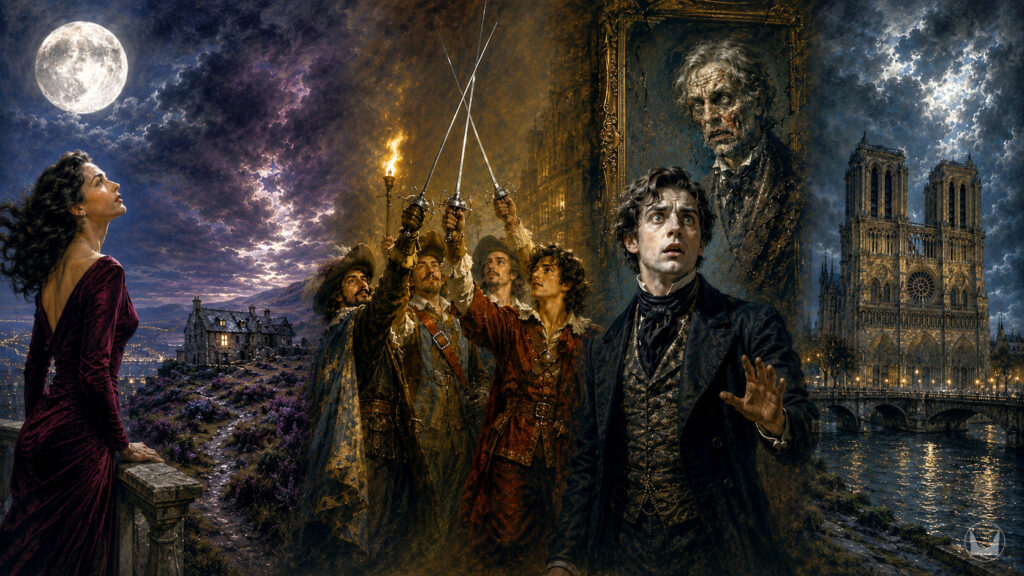
There are books one reads, and books one lives. The ten gathered here belong to the second category. I have returned to each of them more than once—some many times—not always for study, not always with a writer’s analytical eye, but often simply for the comfort of returning to a world that once held me completely. When nostalgia strikes, when I need emotional nourishment of the particular kind that only great fiction provides, these are the novels I reach for. They are not merely influences. They are companions.
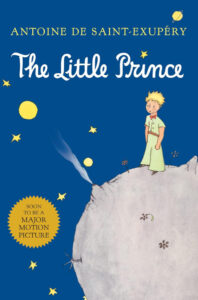 1. The Little Prince, by Antoine de Saint-Exupéry
I was perhaps eleven years old—in the mid-1970s, this was precisely the sort of book a child of my generation was given—when I first met the melancholy boy from Asteroid B-612. It touched me in a place I could not yet name. For a long time afterward I saw myself in him: that sad little prince, alone on his small world, tending his rose, asking questions that the grown-up world found inconvenient. Saint-Exupéry wrote what appears to be a children’s fable and concealed within it one of the most searching meditations on loneliness, love, and the cost of seeing clearly that the twentieth century produced. I did not understand all of it at eleven. I understood enough. And every rereading since has found new rooms in that small, inexhaustible book.
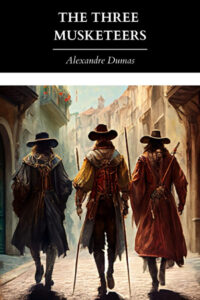 2. The Three Musketeers, by Alexandre Dumas
I stayed in love with D’Artagnan for most of my young adult life, and I make no apology for it. The Gascon arrives in Paris with nothing but his horse, his sword, and an absolutely unshakeable belief in himself, and within pages he has quarreled with three of the most famous men in France and turned them into his brothers. Dumas understood something about narrative momentum that most novelists never learn: that a story must move, that action must carry genuine stakes, that friendship between men can be one of the great subjects of literature. The swashbuckling set pieces are magnificent—I read them as a teenager with my heart hammering—but what kept me returning was the warmth between Athos, Porthos, Aramis, and D’Artagnan: four completely different men who would die for one another without a second thought. All for one.
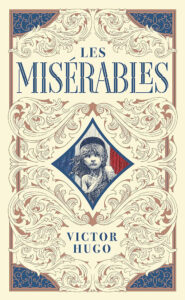 3. Les Misérables, by Victor Hugo
This novel brings me to tears every time. Guaranteed. I do not say that as a figure of speech. I say it as a statement of reliable physiological fact. Jean Valjean, Fantine, Cosette—Hugo gave these three the kind of suffering that feels not invented but remembered, as though he had simply written down what he had witnessed. I came to Les Misérables already carrying a great deal of history about the French Revolution and the age that followed it. This novel did not merely complement that history; it gave it a human face, a human cost, a human voice crying out for the innate right that every person possesses to pursue happiness, to be seen, to be permitted to become something other than what poverty and injustice have made of them. Hugo is not a subtle novelist. He does not need to be. He has the courage of his convictions and the technique to match them, and the result is one of the largest-hearted books ever written.
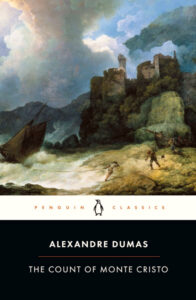 4. The Count of Monte Cristo, by Alexandre Dumas
If The Three Musketeers gave me D’Artagnan, The Count of Monte Cristo gave me Edmond. The Edmond in my own nom de plume is my homage to Alexandre Dumas and to the man I have been in love with since the late 1970s. Edmond Dantès is one of the supreme creations of world literature: a man stripped of everything—his freedom, his name, his youth, his beloved—who descends into the darkness of the Château d’If and emerges, years later, as something almost beyond human, an instrument of Providence so perfectly calibrated that his revenge becomes a kind of terrible art. The novel is absolutely spellbinding; I cannot think of higher praise. It is one of the greatest novels ever written, and I believe that without reservation. It taught me that plot is not the enemy of literature. In the right hands, plot is literature.
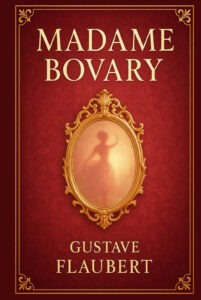 5. Madame Bovary, by Gustave Flaubert
I was a teenage boy when I first read this novel, and I confess it took me some time to fully understand Emma Bovary‘s depth. She is a woman who wants more than her world will give her—more beauty, more passion, more meaning—and she destroys herself in the wanting. The teenage boy I was registered the destruction before he understood the wanting. I eventually caught up, and I am all the gladder for it. Flaubert gave Emma the most complex inner life in nineteenth-century fiction, not a sympathetic inner life, not always a likeable one, but completely real, rendered in prose of such precision that the gap between what Emma imagines and what actually surrounds her becomes one of the most devastating effects in all of literature. I could not write authentic female characters for my own novels had I not spent time inside Emma Bovary‘s consciousness. She taught me that a woman’s interiority is not a foreign country. It is simply another human country, rendered by a writer with the courage and skill to enter it honestly.
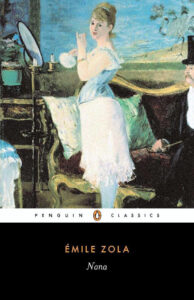 6. Nana, by Émile Zola
Where Flaubert gave me complexity, Zola gave me nature. Nana belongs to the tradition of Naturalism—not Romanticism—and the distinction matters enormously. Zola does not idealize his characters, does not soften their appetites or dignify their failures with false transcendence. Nana Coupeau is a creature of her environment: a daughter of the Paris streets who becomes, briefly and brilliantly, the most desired woman in the city, and who destroys the men who desire her not out of malice but out of a kind of magnificent indifference. I read it in my late teens, in the 1980s, and it delighted me with its honesty.Zola‘s psychological observations are razor-sharp: he sees his characters as they are, not as they would wish to be seen, and he renders that gap with the precision of a natural scientist and the empathy of a human being who has looked at the world without flinching. He taught me that the truth about a person is always more interesting than any idealization of them.
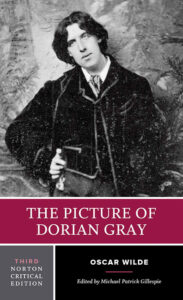 7. The Picture of Dorian Gray, by Oscar Wilde
I will be direct about what this novel did for me because I think directness is the only fitting tribute to Oscar Wilde. The Picture of Dorian Gray opened my eyes to gay—or at least bisexual—characters in fiction at a time when I needed that opening desperately. In my formative years, the word used was homosexualism, and it was classified as a mental disorder by the World Health Organization. The literature I had encountered until then had shown me nothing of myself. And then Wilde arrived with his languid, brilliant Lord Henry, his beautiful and ruined Dorian, his devotion and self-destruction and wit sharp enough to draw blood. I understood that I was not so strange as I had been made to feel. Beyond what it gave me personally, the novel is a masterwork: a philosophical fairy tale about beauty, corruption, and the portrait we all carry within us of the person we are becoming. Wilde wrote it as though it cost him nothing. It cost him everything.
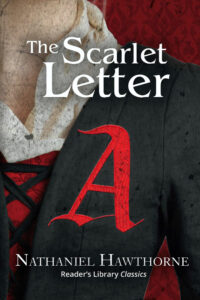 8. The Scarlet Letter, by Nathaniel Hawthorne
I found this novel when I immigrated to California in my twenties and was attending college. It arrived at exactly the right moment because I had little understanding of the Protestant moral architecture that governs so much of Anglo-Saxon culture. I had been raised in a deeply Roman Catholic world; I was no longer a Catholic by the time I read Hawthorne, but the Catholic formation was still in my bones, and the Puritan world of The Scarlet Letter was utterly foreign. Hester Prynne is a character who touches me deeply—a woman condemned by her community to wear her transgression as an emblem, who transforms that emblem by the force of her dignity into something approaching grace. Hawthorne understood that shame is a social mechanism, not a moral one, and that the human spirit, given sufficient interiority and sufficient time, can make meaning out of any mark the world brands upon it. In my novel set in the Renaissance, A Tale of Paris & Paris: Echoes of Troy, the characters of Stella Prinelli and Friar Arturo de Dimedalle are my homage to Nathaniel Hawthorne‘s Hester and Arthur, centuries earlier, in the Florentine Republic.
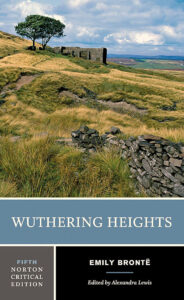 9. Wuthering Heights, by Emily Brontë
This is, without question, my favourite novel of all time. I have searched for Heathcliff all my life—not that I identify with Cathy Earnshaw, but because I have longed, since I first read this book, to be Heathcliff‘s Edmond, to live with him as his husband, which the twenty-first century at least permits us to imagine. Brontë wrote something that should not exist: a love story that contains almost no tenderness, a Gothic novel with no supernatural apparatus beyond the atmosphere, a tragedy in which every character is implicated in their own destruction and yet none can be simply condemned. Heathcliff is monstrous. Heathcliff is magnificent. The Moors are not backdrop; they are character, presence, fate. And the prose has a wildness to it that Emily Brontë, dying at thirty, left to the world like a gift she did not know she was giving. No novel has taken my heart hostage more completely.
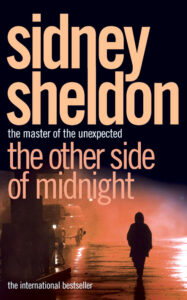 10. The Other Side of Midnight, by Sidney Sheldon
An honourable mention that has earned its place on this list many times over. Sidney Sheldon‘s narrative style is entirely different from my usual literary fare, and that is part of what it taught me. Noelle Page is one of the most memorable characters I have ever encountered in fiction: a woman of staggering beauty, absolute determination, and a capacity for vengeance that would have made Edmond Dantès himself pause. Her story is breathtaking and unforgettable. If I were ever to choose a woman as my companion in life, she would be her. Sheldon understood something that more self-consciously literary novelists sometimes forget: that narrative momentum is not a concession to popular taste but a form of respect for the reader, a promise made and kept across six hundred pages. The Other Side of Midnight kept every promise. It reminded me that a great story, told with absolute conviction, transcends every category.

These ten novels did not merely show me how to write; they showed me why. They are the books I come back to when I need to remember what literature is for, what it can do to a solitary reader in a quiet room, what it can give that nothing else quite gives. If my own novels find their way to even a handful of readers the way these books found their way to me, I will consider the work well done.

Rio de Janeiro, Autumntide of MMXXVI