Six novels this month—two Brazilian, four from the European tradition—all concerned with what society does to people who fall outside its sanctioned arrangements.
 Tess of the d’Urbervilles: A Pure Woman (1891), Thomas Hardy
Tess Durbeyfield is a farmer’s daughter whose family, learning of a distant, probably fictional connection to the ancient d’Urberville name, sends her to claim kinship with that wealthy family. Alec d’Urberville is not a cousin. He is an opportunist. Hardy renders what follows without flinching: seduction, a child who does not survive infancy, a brief and wrecked happiness with the clergyman’s son Angel Clare, whose professed liberalism dissolves the moment it is tested on his wedding night. The novel’s great argument is that Tess is betrayed not once but at every turn: by her family, by Alec, by Angel, and by a society that reserves its harshest judgements for the one person least deserving of them. I return to it every so often and find it more devastating each time.
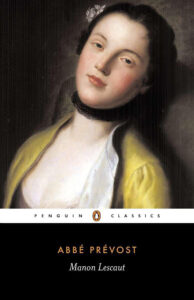 The Story of the Chevalier des Grieux and Manon Lescaut (1731), Abbé Prévost
The Chevalier des Grieux is perhaps the most devoted fool in European fiction. He meets Manon at a coaching inn, abandons his studies and his family, and spends the better part of the novel in a spiral of poverty, crime, imprisonment, and exile for a woman he knows will always choose comfort over fidelity. The French authorities seized every copy they could find on publication; the book was burned in 1733 and again in 1735. None of it worked. Manon Lescaut survived, as novels that trouble moral certainties tend to do. Whether des Grieux is a victim of love or his refusal to see clearly remains unanswered. Prévost lets the reader sit with both possibilities.
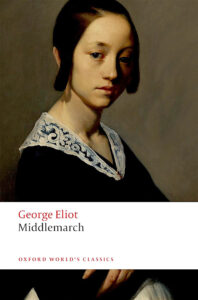 Middlemarch (serialized December 1871—December 1872), George Eliot
Set in a provincial Midlands town during the reform debates of the early 1830s, it follows Dorothea Brooke, who mistakes intellectual austerity for intellectual greatness and marries the wrong man on that basis, and Dr. Tertius Lydgate, who arrives with genuine medical ambition but is undone by debt and a wife who wants different things than he does. What Eliot understands, and what no condensed description can convey, is that most lives are not ruined by one decision but by the accumulated pressure of small miscalculations, misread characters, and circumstances that did not have to fall the way they did. The famous closing paragraph, on the incalculable good done by people who “lived faithfully a hidden life,” moves me to tears because it makes me contemplate the lives of my departed ancestors, some of whom I remember.
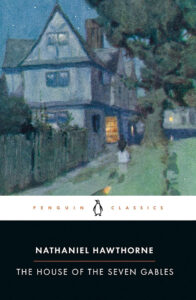 The House of the Seven Gables (1851), Nathaniel Hawthorne
Where The Scarlet Letter drives toward its conclusion with inevitability, this is a more patient, more atmospheric novel. A Salem mansion, built on land seized through a false accusation of witchcraft two centuries prior, still houses the last of the Pyncheon line: the elderly Hepzibah, who opens a small shop in the house’s side entrance to support her recently freed brother Clifford, a man whom wrongful imprisonment has left damaged and not quite present. The novel’s argument is that the sins of acquisition do not dissolve with the generation that committed them. They settle into the walls. The arrival of the young cousin Phoebe and the boarder Holgrave, who carries his own quiet connection to the original wrong, gives the novel its movement toward something that might be called resolution. The house itself broods on every page. And, frankly, Nathaniel Hawthorne‘s prose is gorgeous.
 Gabriela, Clove and Cinnamon (1958), Jorge Amado
Ilhéus in the 1920s is a cacao boomtown: money arriving faster than the social structures can absorb it, old coronel families clinging to patriarchal arrangements that the new century is already dismantling. Into this comes Gabriela, a migrant worker from the drought-stricken sertão (a semi-arid thorny scrubland), hired as a cook by the Syrian-Lebanese bar owner Nacib Saad. Amado renders her with warmth and without sentimentality: she is sensual, generous, down-to-earth, and utterly unable to become what the men around her want her to be. The novel’s central tension is not between her and Nacib but between Gabriela and the civilized idea of her—the version that Ilhéus society, and Nacib himself, keep trying to install in place of the actual woman. The clove and cinnamon of the title refer to the color of her skin and her scent. A novel about freedom written in the language of pleasure, which is the kind of thing Jorge Amado did with mastery. This is a classic of Brazilian literature, adapted to film and television several times.
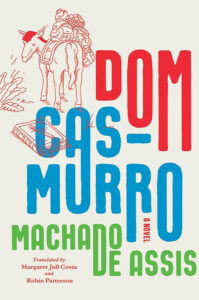 Dom Casmurro (1899), Machado de Assis
Bento Santiago, nicknamed Dom Casmurro (meaning Lord Sullen, in Portuguese), writes his memoirs in old age to make sense of what happened to him. He tells us of his childhood love for Maria Capitolina (Capitu), the neighbor girl with the famous olhos de ressaca, eyes like the undertow; of his mother’s determination to make him a priest; of his escape from the seminary; of his marriage; of his friendship with Escobar, who marries Capitu’s friend Sancha and stays close to the couple through the years that follow. When Escobar drowns, Bento watches Capitu at the funeral and begins to read everything he has ever seen as evidence of something he cannot prove.
What Machado de Assis understood is that an unreliable narrator does not announce himself. Bento’s account is measured, even elegant. He is the kind of man who sounds reasonable. Whether Capitu did what Bento believes she did, or whether a jealous and limited man has organized a lifetime’s worth of ambiguous evidence into a case against his wife and then sentenced her in absentia, the novel does not say. It remains the central unresolved question of Brazilian literature, and the argument over it has not quieted in 125 years. That is the measure of what Machado de Assis achieved.

Personal Note: I read Machado de Assis in the original Portuguese and can attest that his prose style is as witty as those of Mark Twain, Henry James, and Anton Chekhov. Their critiques of nineteenth-century society and the psychological complexity of their characters share the same tradition. Readers who love Henry James‘s The Turn of the Screw are likely to appreciate Assis‘s Dom Casmurro and his other novels.

Rio de Janeiro, the v day of July, MMXXVI.