Every few months I set aside the novelist’s desk and return to the reader’s chair. These are six books I return to, recommend without hesitation, or simply cannot stop thinking about. They span centuries, continents, and registers—Gothic Louisiana, medieval Cornwall, the towers of Notre-Dame, Revolutionary France, the streets of Salvador da Bahia—but they share the quality I value most in fiction: they leave marks.
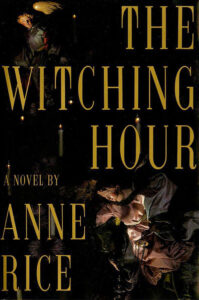 The Witching Hour (1990), Anne Rice
Rowan Mayfair is one of those characters one cannot help but remember long after the book is closed. A neurosurgeon who discovers she is the latest in a dynasty of witches stretching back through centuries of women, from the Scottish Highlands to the Caribbean to the Garden District of New Orleans, Rowan carries the novel’s immense architecture on her shoulders without buckling under it. Anne Rice‘s prose is gothically beautiful: lush, incantatory, unafraid of length. Uncle Julien, one of the few openly homosexual characters in the historical-fantasy fiction of that decade, haunts the novel’s earlier sections with a presence that lingers well past his own chapters. The tale of the Mayfair witches, from their dark beginnings in Scotland to their strange flowering in Louisiana, is riveting from the first page. Rice‘s aesthetic approach to language is something I have always admired and learned from.
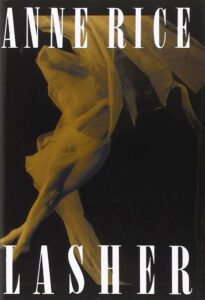
The second volume of the Mayfair Witches trilogy follows Rowan into darker and stranger territory, and what I found most compelling was finally getting to know the spirit who has shadowed the family for centuries—Lasher himself, with his ancient hunger and his terrible patience. Rice gives him a history and a logic that make him unnerving rather than merely supernatural. Rowan’s characterization in this volume is somewhat less vivid than in The Witching Hour. She recedes at moments when the reader most wants her close. Yet the novel’s ambition and mythological depth compensate for this. The third volume, Taltos (1994), I read to finish the series, and I am glad I did; but I will not pretend it left the same impression as the first two. Some trilogies run their course; others stop.
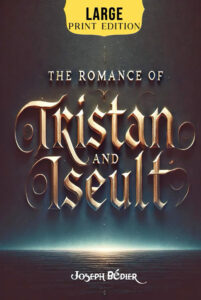 The Romance of Tristan and Iseult (1900), Joseph Bédier
This is my favorite tale of chivalry, betrayal, and transcendent love. I have read it countless times. Bédier drew from the scattered fragments of the legend and wove them into a single, continuous narrative: the Cornish knight Tristan, sent to bring the Irish princess Iseult to be the bride of King Mark, the love potion drunk by mistake at sea, and the decades of longing, deception, and grief that follow. The story ends as it must, and it still takes my breath away. Though I have always read it in English translation, Bédier‘s prose, even filtered through a translator’s hand, carries an immersive quality that returns me to the Middle Ages as any work of scholarship ever could. I recommend it without qualification to anyone who has not yet read it and to anyone who has.
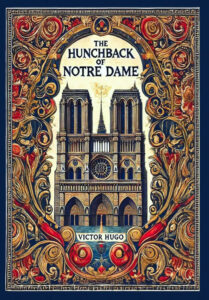 The Hunchback of Notre-Dame (1831), Victor Hugo
Quasimodo has tugged at my feelings since I first found him as a teenager, and the pull has not weakened. Deaf, disfigured, isolated in the towers of Notre-Dame, he loves with a purity and a selflessness that puts the powerful around him to shame. Hugo‘s Paris is a character in its own right—teeming, brutal, magnificent—and the cathedral itself rises through the novel as something between a home and a prison. Esmeralda, the young Romani dancer Quasimodo adores from a distance, is likewise indelible: generous, brave, and destroyed by a world that cannot tolerate what it does not understand. Of all the characters I have encountered in a lifetime of reading, his is the one I most empathize with. He fills me with grief for what the world does to the good souls who are less fortunate. That grief has never entirely lifted.
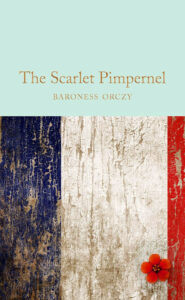 The Scarlet Pimpernel (1905), Baroness Orczy
I have had a crush on Sir Percy Blakeney from the moment I was old enough to understand what a crush was. The English baronet leads a double life: in Paris he plays the vain, fashionable aristocrat; by night he is the Scarlet Pimpernel, orchestrating the audacious rescues of French nobles condemned to the guillotine during the Reign of Terror. Orczy moves the plot with the velocity of a thriller, the wit of a comedy of manners, and the heart of a romance. Sir Percy’s token, the small red flower left as his calling card, remains burnished in my memory long past any reasonable explanation. This novel is my definition of swashbuckling romance, and it has never been bettered.
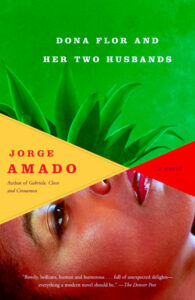 Dona Flor and Her Two Husbands (1966), Jorge Amado
This is an exuberant Brazilian novel, and I would be surprised if anyone read it without smiling. Dona Flor, a cooking teacher in Salvador da Bahia, loses her first husband, Vadinho, a charming, gambling, utterly irresponsible rogue, on the morning of Ash Wednesday, mid-dance in the street, dressed as a baiana woman, cachaça in hand. After mourning him, she remarries the dependable and unexciting pharmacist Dr. Teodoro, and then Vadinho returns: a ghost visible only to her, intent on resuming marital relations. What follows is shocking, comic, and wholly original. Amado wrote out of the flesh and spirit of Bahian culture, and it shows on every page.
I must confess that when I think of how I might ideally leave this world, it is Vadinho’s exit that comes to mind: a morning of Carnaval, a cobblestoned street in front of a church, musicians playing a march, a lit cigarette in one hand, cachaça in the other, dressed as a baiana—and then, without warning, down. That is very Brazilian. And not the worst way to go.

Rio de Janeiro, the ii day of June, MMXXVI.