I confess at the outset that my experience of other kinds of readers is limited, and what little I have is not encouraging. My dearest friend Yolis, whose loyalty and warmth I would not trade for anything this world has to offer, finds my novels a considerable trial. She endures them when I give her an ultimatum, bless her soul, and returns promptly afterward to whatever women’s fiction bestseller is trending at the moment. Several other friends are not different. They are wonderful human beings. They are not my readers.
The readers I do have—the ones who seek out historical fiction of their own accord, who come to a novel expecting density and reward—are another species entirely. They write to me with observations that sharpen my next chapter. They catch allusions I buried three layers deep. They ask questions about the archaeology that sent me back to my own research notes. Over time I have come to understand what they have in common, and why writing for them is not a constraint but a liberation.
 I. They Read for Literature, Not for Plot
Historical fiction readers lean literary rather than commercial in their tastes. On the whole, they are more likely to reach for Guy Gavriel Kay than Brandon Sanderson, not because they disdain plot but because plot alone does not satisfy them. They want the novel to be doing something beyond the movement of events: something in the language, the structure, the moral intelligence brought to bear on lives lived in other times. They are readers who have already made a choice, before they open the book, to bring their full attention to what they find inside.
Writing for these readers means that no sentence is wasted. The prose must earn its place not by just advancing the story but by being worth the reading. This is a high standard. It is also, for a writer who cares about language above almost everything else, the only standard worth meeting.
 II. They Hear the Prose
My historical fiction readers notice things that many readers pass over. They notice when the rhythm changes, when a long periodic construction gives way to a short declarative one, when the syntax itself carries emotional weight. They crave variety: not the monotony of the same sentence shape repeated until the eye glazes, but the full range of what the language can do when a writer is paying attention.
This matters to me because my prose—in A Tale of Paris & Paris, in Asterios, in Atalanta—is built as much on rhythm as on imagery. The archaic register I employ is not a costume; it is a musical instrument. A reader who cannot hear it will find it opaque. A reader who can hear it will find it carrying them forward in ways they may not be able to articulate. Historical fiction readers are those who can hear it. They are, in the deepest sense, listeners.
 III. They Bring Their Own Vocabulary
When I ask my readers whether they consulted a dictionary while reading my novels, the answer is almost always no. They either know the words or infer them from context. The archaic vocabulary I employ—the ere and anon, the wanax and the maῖa, the deliberate Middle English spellings—does not stop them. It locates them. It tells them where they are.
This is not a small thing. A reader with a rich vocabulary approaches an unfamiliar word as an invitation rather than an obstacle. They lean toward it rather than away. Perhaps more than any other genre, historical fiction selects for this quality in its readership because the genre demands it: you cannot enter another century without being willing to encounter the unfamiliar and trust that it will yield its meaning.
 IV. They Want Interiority
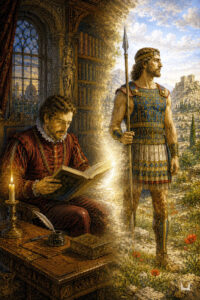
Historical fiction readers want to live inside a consciousness, not observe one from a comfortable distance. They want to know not only what a character does but what it costs them, what it feels like from inside the body and mind of someone for whom the modern world has not yet been invented. They want the full weight of another life.
This is what Hilary Mantel gave her readers in Thomas Cromwell. It is what Dorothy Dunnett gave them in Francis Crawford of Lymond. It is what I attempt to give in Lorenzo and Vittorio, in Asterios, in Atalanta and Néos: not characters who resemble modern people in historical dress, but consciousnesses formed by the worlds they inhabit, with all the strangeness and the beauty that entails. Historical fiction readers do not want period drama. They want past lives rendered from the inside, with full fidelity to what those lives were.
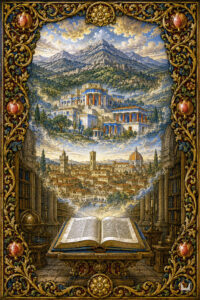 V. They Wish To Be Transported By the Language
The final quality my readers share is the one that shapes how I write. They do not want to be told about another time and place. They want the prose to take them there—not through plot summary or historical exposition, but through the texture and rhythm of the language, the weight of the nouns, the way the light falls on a described surface.
This is what excites me most when I think about the readers who have accompanied me through the streets of Renaissance Cortona in A Tale of Paris & Paris: Echoes of Troy, through the palace corridors of Knossos in Asterios and the Labyrinth, and now through the forested mountains of Arcadia in Atalanta of the Wild. They did not follow the characters through those places. They arrived there. The language was not a window onto the past; it was a passage through it. And they were willing to make the crossing.
That willingness is what makes historical fiction readers the best readers to write for. They ask everything of a novel, and when a novel gives them everything in return, they do not forget it. They write letters. They return. They bring others with them.
I write for them.
Rio de Janeiro, the x day of June, MMXXVI.

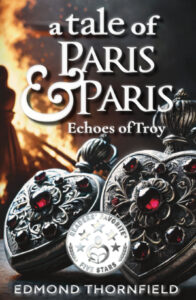
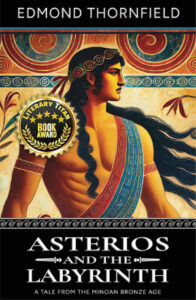
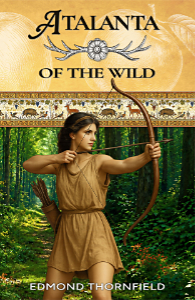
Click any cover to read a preview chapter and learn more.