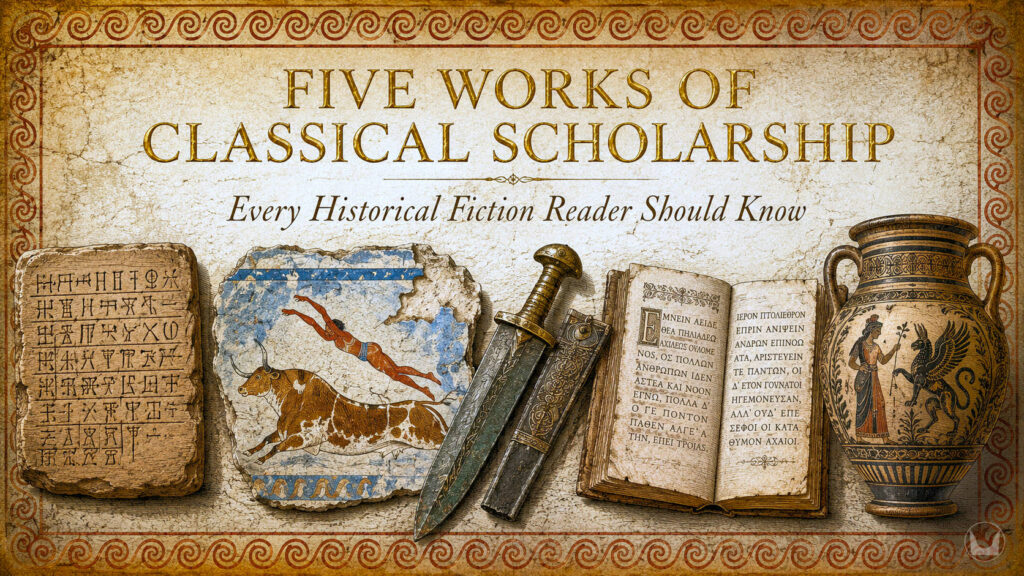
If you have ever read a novel set in the ancient world and found yourself wondering how much of it is true—how the author knew what a Mycenaean palace smelled like, or how a Minoan priestess dressed, or what Linear B actually says—then you have already crossed the threshold from reader into something more. You are the reader these books were written for.
The five works below are not textbooks. They are the books I kept open on my desk while writing Atalanta of the Wild, consulted repeatedly while planning Asterios and the Labyrinth, and regard as indispensable companions to any serious engagement with the Bronze Age Aegean. Each one is accessible to the general reader while meeting the standards of rigorous scholarship. Together they form the foundation I would recommend to any historical fiction reader who wants to understand, not merely enjoy, the world behind the novels.
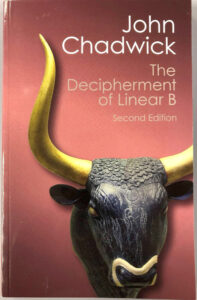 1. The Decipherment of Linear B (1958), by John Chadwick
Michael Ventris broke the code in 1952. John Chadwick, his collaborator, wrote the account of how it happened—and it reads like a detective story. Linear B, the script of the Mycenaean Greeks, had baffled scholars for half a century. When Ventris demonstrated that the language behind it was an early form of Greek, the discovery rewrote the history of Western civilization. Chadwick‘s book explains the decipherment step by step, in prose clear enough for a reader with no prior knowledge of linguistics. It also opens the archive of the tablets themselves: inventories of bronze, records of wool and grain, lists of rowers and slaves and offerings to gods whose names we recognize (Poseidon, Zeus, Hera), written three thousand years before Homer. No other book brings the palace economy of the Late Bronze Age so close.
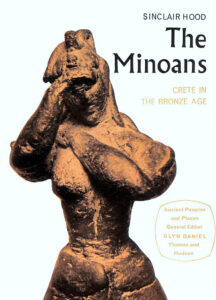 2. The Minoans: Crete in the Bronze Age (1971), by Sinclair Hood
Sinclair Hood spent years excavating at Knossos and elsewhere on Crete, and that fieldwork shows on every page. This is the best single introduction to Minoan civilization available to the general reader: the palaces, the frescoes, the bull-leaping, the snake goddesses, the still-undeciphered script known as Linear A. Hood writes with the authority of someone who has held the objects and walked the sites, and he is honest about what we do not know—which, with the Minoans, is considerable. Their language remains undeciphered; their religion is inferred from images rather than texts. Hood gives you a clear picture of what the evidence shows and where interpretation ends and speculation begins. For any novelist working in the Bronze Age Aegean, this is the book that prevents anachronism.
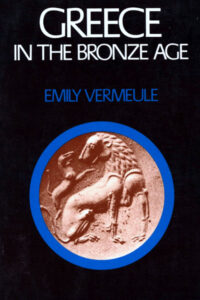 3. Greece in the Bronze Age (1964), by Emily Vermeule
Vermeule‘s survey covers the entire Greek Bronze Age from the Early Helladic period through the collapse of the Mycenaean palace system at the end of the twelfth century BC. It is more technically demanding than Hood‘s Minoans, but it repays the effort. The chapters on Mycenaean burial practice, warfare, trade networks, and the role of women are particularly valuable for the novelist. Vermeule is also a fine prose stylist—rarer in classical scholarship than one might hope—and her chapter on the end of the Bronze Age, the fires and abandonments and migrations that closed an age, has the emotional weight of tragedy. I reread it before writing the later chapters of Atalanta of the Wild.
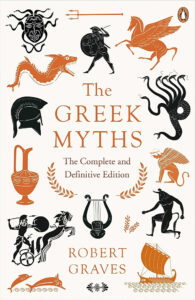 4. The Greek Myths (1955), by Robert Graves
This one requires a word of caution, which Graves himself would probably not have offered. His interpretive framework—the theory of a pre-Hellenic matriarchal religion overlaid by later patriarchal Greek religion—is not accepted by most classical scholars today and should be read as the inspired speculation it is rather than settled fact. Set that aside and you still have something invaluable: the most comprehensive English-language collection of Greek mythological sources, assembled with meticulous citations to the ancient texts behind each story. For every myth Graves recounts, he tells you where it comes from (Pindar, Apollodorus, Ovid, Pausanias, Hyginus) and the variations between sources. That apparatus alone makes the two volumes indispensable. When I needed to know every extant version of the myth of Atalanta, Graves was the first place I looked.
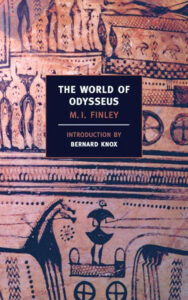 5. The World of Odysseus (1954), by M.I. Finley
Homer is not a historical source. Moses Finley knew this better than anyone, and his short, elegant book explains what Homer‘s epics do and do not tell us about the society that produced them. Finley argues that the Iliad and Odyssey reflect a real social world, one of gift exchange, reciprocal obligation, household economy, and heroic honour, but one that belongs to the early Iron Age, not to Mycenae. The distinction matters enormously for the historical novelist. The World of Odysseus is the antidote to the common error of reading Bronze Age Greece through Homeric eyes. It is also, at under two hundred pages, one of the most lucid works of classical scholarship ever written for a general audience. Read it slowly.

These five books have shaped my writing more than any novel I have read, with the possible exception of Mary Renault. They will not tell you everything—no books can, when so much of the Bronze Age remains buried or burnt or simply silent. But they will teach you to ask the right questions, which is where every good historical novel begins.
Browse through my blog for more on the fieldwork behind the novels.
Rio de Janeiro, Autumntide of MMXXVI
Other essays in this ongoing series on the Bronze Age Aegean, the Homeric tradition, and the craft of writing historical fiction set in the ancient Eastern Mediterranean are available in the blog archive at ethornauthor.com.
Related essays include: