Why Does AI Prose Manufacture Tension It Has No Intention of Honoring?
This is Essay 18 of 22 in the series Why Choose 100% Human Authors, addressed to readers who want to understand what a human author does that a machine cannot and why that difference matters to the experience of literary fiction.

 The Obstacle That Exists to Be Overcome
There is a shape that conflict takes in a great deal of AI-generated fiction, and once recognized it becomes difficult to stop seeing. An obstacle is introduced. It is substantial enough to require a response. The protagonist responds, the obstacle yields, and the narrative proceeds to the next event as though nothing of consequence had occurred. The obstacle existed to be overcome, not to change the person who overcame it.
This is conflict without consequence: tension manufactured for the sake of forward motion and dissolved the moment it has served its purpose, leaving no residue in the character who passed through it. The reader senses that the difficulty was never real. It was scaffolding, erected to be climbed and then removed.
 What Consequence Looks Like
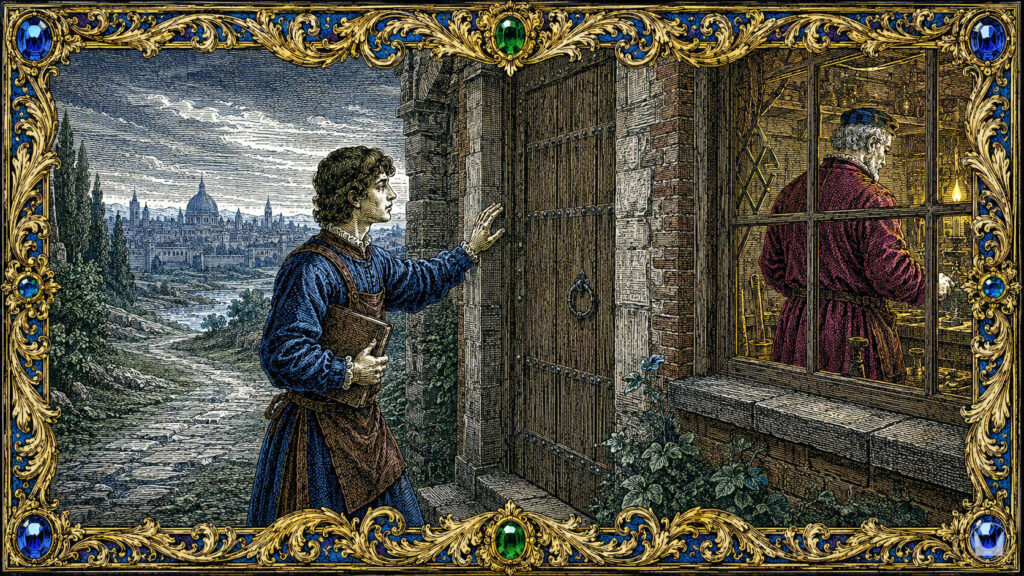
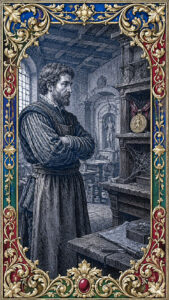
Consider an invented example: a guild apprentice is denied entry to a competition because his master, out of pride or fear of being outshone, refuses to sponsor him. In the consequence-free version, the apprentice finds another sponsor, enters the competition, and the refusal is never mentioned again. The obstacle has done its job, which was create a delay before he reaches what the plot requires of him.
Now introduce consequence. He finds a sponsor who is a rival of his master’s, and entering the competition means his master will see an admission of where his loyalty went. The apprentice wins. He does not return to his master’s workshop. The story does not require a clean break, but something between them cannot be taken back. Years later, he declines to take on students of his own, and the narrative does not explain why, trusting the reader to recall the refusal that taught him what sponsorship costs a master to give. The obstacle has not simply been overcome. It has left a mark that alters how the character moves through everything that follows.
The Obstacle as Furniture
A related version of this failure treats conflict as something closer to set dressing than structure: a storm that delays a journey and is never weathered in a way that matters once it passes; a misunderstanding between two characters that resolves the moment one of them offers an explanation. Each of these is a conflict in the technical sense. Something stands in the protagonist’s way and then does not. Yet nothing about the protagonist or the world has been required to change in order to pass through it.
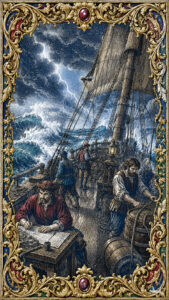 The test a writer might apply is simple to state and demanding to satisfy: if this obstacle were removed, would the character arrive at the ending a different person? If the answer is no, the obstacle has not functioned as conflict. It has functioned as a delay.
Human Writers Are Not Immune
This failure is not exclusive to machines. A human author in early passes focused on getting the plot from one point to the next will often write the obstacle that exists only to be overcome. The first draft of a difficult chapter tends to be the consequence-free version: the storm that passes, the secret that is revealed and causes no change because the writer has not yet decided what it should cost.
Yet the human author can ask the question a language model cannot: what did this cost the character, and if the answer is nothing, what would it need to cost for the scene to mean what it is pretending to mean? This is an act of judgment, not pattern completion. It requires holding the character’s arc in mind and recognizing that an obstacle without aftermath is a narrative debt incurred and not paid.
A language model can assess that obstacles in well-regarded fiction tend to have consequences, and it can attach a consequence-shaped sentence to the obstacle it has generated. What it cannot do is determine whether that outcome is the right one for the character in question, earned by the story it has been building. It can simulate the shape of cost. It cannot calculate what a particular soul should be made to pay.
 What a Human Author Does
A writer who knows a character well does not impose conflict from outside the story and then resolve it for the sake of the plot. The writer discovers which obstacles the character has been moving through unchanged and returns to ensure that they pay a price true to who they are.
The correction is seldom a matter of adding more obstacles or larger ones. It is a matter of permitting the existing obstacle to leave a mark rather than dissolve without a trace. The apprentice does not need a second betrayal; he needs the first one to follow him. The reader who finishes such a story does not remember a sequence of problems solved. They remember a person who is not the same as they were when the story began and that every obstacle along the way was real.
Rio de Janeiro, the ii day of July, MMXXVI.