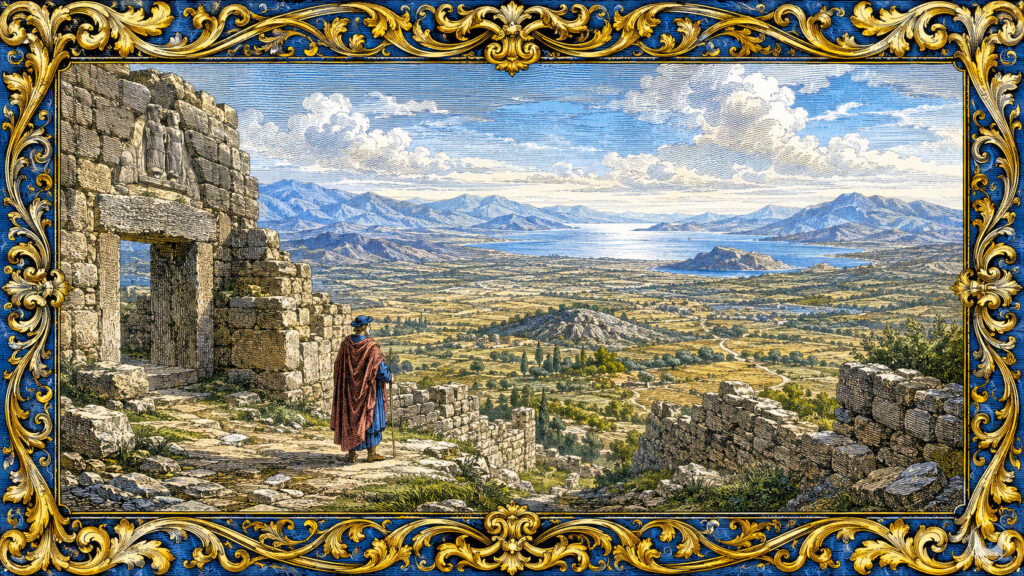
Dead Languages and Living Prose: Why Archaic English Is Not an Affectation

People sometimes tell me that archaic English is unnecessary. That it creates distance. That modern readers want transparency, immediacy, a prose that gets out of the way of the story. I understand the argument. I disagree with it not on grounds of taste, but of accuracy. When you set a novel in the fifteenth century,

Dead Languages and Living Prose: Why Archaic English Is Not an Affectation Read More »

Five Things Cortona Taught Me About Writing Sense of Place

Five Things Cortona Taught Me About Writing Sense of Place

There is a difference between visiting a place and being taught by it. Tourism gives you impressions. Fieldwork—the kind that involves returning in different seasons, taking measurements, sitting alone in churches until the silence becomes uncomfortable—gives you something harder to name and more difficult to acquire: an understanding of how a place works upon a

Five Things Cortona Taught Me About Writing Sense of Place Read More »

Rio de Janeiro and the Bronze Age: Writing Ancient Worlds from a Modern City

Rio de Janeiro and the Bronze Age: Writing Ancient Worlds from a Modern City

I can offer no other explanation: I close my eyes and travel. The ancient Mediterranean worlds of the tales I write lie some 9,600 kilometers from my writing desk in Rio de Janeiro, and yet, in the solitude of the working hours—the cell phone on mute, the tropical city going about its business beyond the

Rio de Janeiro and the Bronze Age: Writing Ancient Worlds from a Modern City Read More »

Reading Like a Novelist: What I Look for in Other People's Books

Reading Like a Novelist: What I Look for in Other People’s Books

There are readers, and there are novelist-readers. The two experiences are not the same. A reader surrenders to the story; a novelist-reader surrenders and watches himself surrendering, noting every mechanism that eases or impedes the fall. I cannot pick up another author’s book without half my mind standing apart, pencil in hand—not exactly to judge,

Reading Like a Novelist: What I Look for in Other People’s Books Read More »

Powered By EmbedPress

Powered By EmbedPress

Powered By EmbedPress